Maintaining a manual transmission’s longevity hinges on regular fluid changes; neglecting this crucial service can lead to costly repairs and diminished performance over time.
Why Regular Fluid Changes are Crucial
Consistent manual transmission fluid changes are paramount for several reasons. The fluid lubricates gears, preventing wear and tear, and manages heat generated during operation. Over time, the fluid degrades, losing its lubricating properties and accumulating contaminants like metal shavings and clutch material.
This compromised fluid increases friction, leading to shifting difficulties, noise, and ultimately, component failure. For specific vehicles, like Honda models from 1998-2005, fluid changes are especially critical due to inherent transmission weaknesses, requiring service every 30,000 miles. Ignoring these intervals can result in significant damage. Proactive maintenance, through regular fluid changes, safeguards your transmission and extends its lifespan, avoiding expensive repairs down the road.
Understanding the Role of Manual Transmission Fluid
Manual transmission fluid performs multiple vital functions beyond simple lubrication. It transmits hydraulic pressure for clutch operation, enabling smooth gear changes. It also cools internal components, dissipating heat generated by friction. Furthermore, it protects against corrosion and prevents wear by creating a protective barrier between moving parts.
Unlike engine oil, transmission fluid doesn’t circulate as rapidly, meaning it’s more susceptible to contamination and breakdown. Different fluids possess varying viscosity and frictional characteristics, impacting shift quality and synchronizer performance. Using the incorrect fluid can lead to grinding gears or clutch slippage. Therefore, understanding its multifaceted role is key to maintaining optimal transmission health and ensuring reliable operation.
Identifying the Correct Fluid for Your Vehicle
Selecting the appropriate transmission fluid is paramount; manufacturers specify fluids like Mercon V, Dexron III, or ATF+4, each with unique properties for optimal performance.
Decoding Transmission Fluid Standards (Mercon V, Dexron III, ATF+4)
Understanding transmission fluid standards is vital for proper maintenance. Mercon V, commonly used in later Ford models, shares similarities with Dexron III but should never replace Ford Type F fluid. It’s a widely applicable automatic transmission fluid for many Ford vehicles.
Dexron III, an older standard, is often superseded by newer formulations, but remains relevant for specific applications. Chrysler’s ATF+4, introduced in 1998, is a synthetic blend suitable for most Chrysler vehicles manufactured before 2000 (excluding some minivans).
Crucially, ATF+4 is not compatible with Dexron or Mercon fluids. Always verify compatibility before mixing or substituting fluids, as incorrect fluid usage can cause significant transmission damage. Referencing your vehicle’s owner’s manual is the definitive way to determine the correct specification.
Specific Fluid Recommendations by Manufacturer (Ford, Chrysler, Honda)
Ford specifications vary; late-model Fords often utilize Mercon V, while older models may require Ford Type F. The F-150 and Explorer, popular models, have differing requirements based on transmission type. Chrysler vehicles from 1998 onwards generally need ATF+4, though pre-2000 minivans are an exception.
Honda transmissions, particularly those from 1998-2005, are known for requiring frequent fluid changes – every 30,000 miles is recommended due to inherent weaknesses. Newer Honda models benefit from service intervals around 45,000 miles.
Honda CVT models specifically require HCF-2 fluid, also with a 30,000-mile change interval to prevent belt slippage. Always consult your owner’s manual for the precise fluid type and capacity for your specific vehicle and model year.
Checking Your Vehicle’s Owner’s Manual
Your vehicle’s owner’s manual is the definitive source for identifying the correct manual transmission fluid. It details the specific fluid type – whether it’s Mercon V, Dexron III, ATF+4, or a manufacturer-specific formulation – required for optimal performance and longevity.
The manual also specifies the fluid capacity, crucial for avoiding under or overfilling. Ignoring these recommendations can lead to transmission damage. Locate the section dedicated to maintenance schedules and fluid specifications.
Pay close attention to any warnings or cautions regarding fluid compatibility. Using the wrong fluid can void your warranty and cause significant mechanical issues. Referencing the manual ensures you’re using the correct product for your vehicle’s unique needs.
Tools and Materials Needed
Essential tools include wrenches, sockets, a drain pan, a funnel, and fluid transfer pump; acquire the correct manual transmission fluid and new drain/fill plugs.
Essential Tools for the Fluid Change
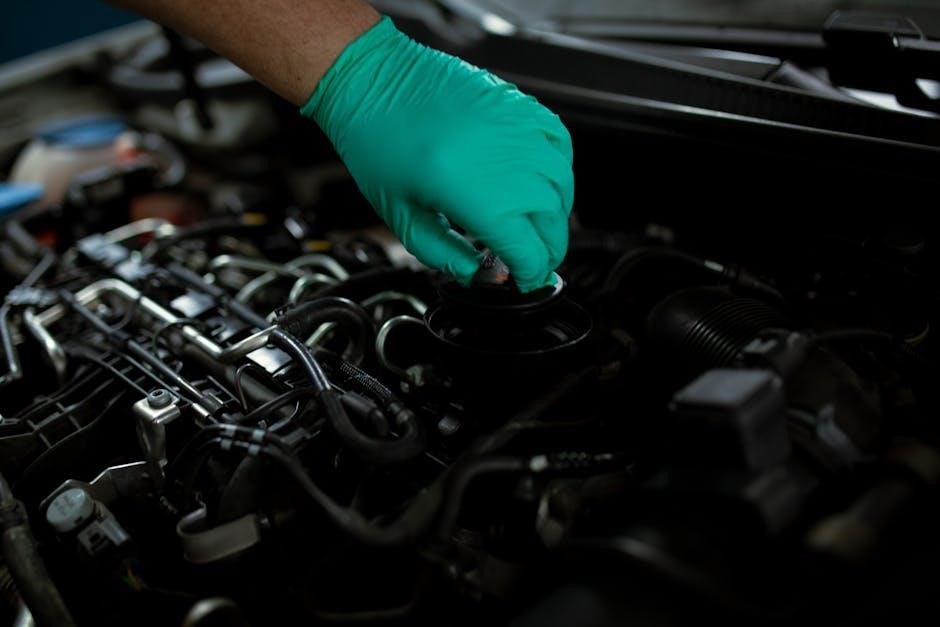
Successfully completing a manual transmission fluid change requires a specific set of tools to ensure efficiency and prevent damage. A socket set and wrenches, sized appropriately for your vehicle’s drain and fill plugs, are paramount. A drain pan, capable of holding the entire fluid capacity of your transmission, is crucial for a clean catch.
Furthermore, a funnel is necessary for accurately refilling the transmission with fresh fluid, minimizing spills. For vehicles where access is limited, a fluid transfer pump can be incredibly helpful. Cleaning supplies, such as rags and brake cleaner, are essential for wiping up spills and preparing surfaces. Finally, a torque wrench is recommended to tighten the drain and fill plugs to the manufacturer’s specifications, preventing leaks and potential damage.
Types of Manual Transmission Fluid Available
A diverse range of manual transmission fluids exists, each formulated to meet specific vehicle requirements. Conventional fluids, often mineral oil-based, are suitable for older vehicles. Synthetic fluids, offering superior thermal stability and lubrication, are ideal for high-performance or heavily loaded transmissions.
Specific standards, like Mercon V (common in late-model Fords, similar to Dexron III but not interchangeable with Ford Type F) and ATF+4 (used in many Chrysler vehicles since 1998), dictate compatibility. Honda transmissions often require specific Honda fluids. It’s vital to understand that mixing fluid types can cause damage. Always prioritize the fluid specified in your vehicle’s owner’s manual to ensure optimal performance and longevity of your transmission.

Step-by-Step Fluid Change Procedure
Begin by locating drain and fill plugs, carefully draining the old fluid, and then refilling with the manufacturer’s recommended fluid for optimal results.
Locating the Drain and Fill Plugs
Identifying the drain and fill plugs is the initial step in a successful manual transmission fluid change. Typically, the fill plug is situated on the side of the transmission case, often requiring a socket wrench for access. The drain plug is usually found at the lowest point of the transmission, designed for easy fluid evacuation.
Before commencing, thoroughly clean the area surrounding both plugs to prevent debris from entering the gearbox during the process. Some models may necessitate tilting the transmission to facilitate complete fluid drainage, while others utilize a dedicated drain plug. Careful observation and referencing your vehicle’s service manual are crucial for accurate plug identification and location.
Draining the Old Fluid
With the drain plug located, position a suitable drain pan beneath it to capture the used transmission fluid. Using the appropriate wrench, carefully loosen and remove the drain plug, allowing the old fluid to flow completely into the pan. Exercise caution as the fluid may be hot.
For some transmission designs, tilting the vehicle or the transmission itself may be necessary to ensure complete drainage. Once the fluid flow ceases, inspect the drain plug for any metallic particles, which could indicate internal transmission wear. Clean the drain plug thoroughly before reinstallation, ensuring a tight seal to prevent leaks.
Refilling with the Correct Fluid
After the old fluid is fully drained, locate the fill plug – typically found on the side of the transmission. Before opening it, ensure you have the correct type of manual transmission fluid readily available, as using the wrong fluid can cause significant damage.
Using a funnel, carefully pour the recommended amount of fluid into the fill opening. Refer to your vehicle’s owner’s manual for the precise capacity. It’s often best to add slightly less than the specified amount initially, then check the fluid level (covered in the next step) and top it off as needed. Avoid overfilling, as this can also lead to issues.
Fluid Level Check and Final Steps
Confirming the proper fluid level is vital for optimal transmission function; a post-change inspection ensures no leaks and verifies smooth operation for lasting reliability.
Verifying the Fluid Level
After refilling, accurately verifying the manual transmission fluid level is paramount. Locate the fill plug, often on the transmission’s side, and carefully remove it. With the engine running and transmission in neutral, or as specified in your vehicle’s manual, insert a flexible dipstick or appropriate tool.
Observe the fluid level against the markings – typically “full” and “low” – ensuring it falls within the acceptable range. Avoid overfilling, as this can cause pressure buildup and leaks. If the level is low, cautiously add more fluid in small increments, rechecking after each addition.
Remember to securely reinstall the fill plug, tightening it to the manufacturer’s specified torque. A correct fluid level guarantees proper lubrication and smooth gear engagement, safeguarding your transmission’s performance and longevity.
Post-Change Inspection
Following the fluid change, a thorough post-change inspection is essential to confirm a successful operation; Begin by visually inspecting the drain and fill plugs for any signs of leakage. Take the vehicle for a short test drive, paying close attention to gear engagement – shifts should be smooth and quiet, without any grinding or hesitation.
Listen for unusual noises emanating from the transmission during acceleration, deceleration, and cruising. Check under the vehicle again for any newly developed leaks around the plugs or transmission housing.
Confirm the transmission operates correctly through all gears. Addressing any issues promptly prevents further damage and ensures optimal performance.
Maintenance Schedules and Intervals
Adhering to recommended intervals—ranging from 30,000 to 45,000 miles—is vital for optimal transmission health, especially for Honda models from 1998-2005.
Recommended Change Intervals for Different Vehicles
Establishing a consistent maintenance schedule for your manual transmission fluid is paramount for ensuring its long-term reliability. While a universal interval doesn’t exist, several factors dictate the optimal timing. Generally, a 30,000-mile interval is recommended for vehicles experiencing demanding conditions, such as frequent towing, aggressive driving, or operation in extreme temperatures.
Specifically, Honda transmissions manufactured between 1998 and 2005 are notably sensitive and benefit from more frequent changes – ideally every 30,000 miles. Newer Honda models, while improved, still perform best with fluid services around the 45,000-mile mark. For other manufacturers, consulting your owner’s manual is crucial. Ford F-150 and Explorer specifications, for instance, can vary depending on the specific transmission model installed. Ignoring these recommendations can lead to premature wear and costly repairs.
Honda Transmission Fluid Change Frequency (1998-2005 & Newer Models)
Honda transmissions, particularly those produced between 1998 and 2005, are known for a design vulnerability necessitating diligent fluid maintenance. These earlier models require remarkably frequent fluid changes – ideally every 30,000 miles – to prevent premature wear and potential failure. This frequent servicing is not merely a suggestion, but a critical preventative measure for longevity.
Later Honda models, while exhibiting improved transmission designs, still significantly benefit from regular fluid services. A recommended interval of approximately 45,000 miles helps maintain optimal performance and prevents issues. Furthermore, Honda’s Continuously Variable Transmissions (CVT) require specific HCF-2 fluid changes every 30,000 miles to avoid belt slippage and ensure smooth operation. Adhering to these schedules is a cost-effective investment in your vehicle’s future.
Potential Problems and Troubleshooting
Identifying contaminated or low fluid manifests as difficult shifting, unusual noises, or complete transmission failure; promptly addressing these issues during a fluid change is vital.
Signs of Contaminated or Low Fluid
Recognizing the indicators of compromised manual transmission fluid is crucial for preventing severe damage. Difficulty shifting gears, particularly a noticeable resistance or grinding sensation, is a primary warning sign. Unusual noises emanating from the transmission, such as whining, clunking, or humming sounds, often suggest internal wear exacerbated by poor fluid condition.
A metallic smell accompanying the fluid during a drain is a clear indication of internal component deterioration. Visually inspecting the fluid reveals much; dark, murky fluid, or fluid containing metallic particles, signifies contamination and the need for immediate attention. Low fluid levels themselves can cause slipping gears and ultimately, transmission failure. Ignoring these symptoms can escalate minor issues into expensive repairs or complete transmission replacement.
Addressing Common Issues During the Change
Encountering difficulties during a manual transmission fluid change is not uncommon. Stripped drain or fill plugs can occur, requiring specialized extraction tools or, in severe cases, plug replacement. Some vehicles lack clearly defined drain plugs, necessitating tilting the transmission for complete fluid removal – a task requiring careful support and safety precautions.
Fluid level verification can be tricky, as many transmissions lack dipsticks. Refilling to the correct capacity, guided by the owner’s manual, is vital. If the fill plug is seized, penetrating oil and patience are key. Always ensure a clean work environment to prevent contaminants from entering the gearbox. Addressing these issues proactively ensures a successful and trouble-free fluid change.